

In partnership with

If you zoom out, something pretty wild is happening:
Power is no longer tied to place.
It’s becoming something you carry.
And the numbers back it up.
🔋 Portable power is quietly exploding
The global portable power station market is expected to exceed $5B by 2030, growing ~8–10% CAGR
The broader battery energy storage market (including portable + grid) is growing 20–30% annually
U.S. consumers spent billions on backup power after major outage years (2021–2024 storm cycles)
And here’s the kicker:
Portable units are one of the fastest-growing segments inside that.
⚡ Why now?
Three forces are colliding:
1. Grid instability is rising
The U.S. now sees more billion-dollar weather events than ever before
Outages are lasting longer, especially in states like Texas, California, Florida
2. Battery costs collapsed
Lithium-ion battery prices have dropped ~85–90% since 2010
What used to cost $10k+ now costs $500–$3,000 for meaningful backup
3. Solar went modular
Foldable panels + plug-and-play systems
No installer needed
No permits
No waiting
You can literally buy a “power plant” on Amazon and have it in 2 days.
🏠 From camping gear → core infrastructure
This used to be niche:
Campers
Van life
Tailgates
Now it’s mainstream:
Apartment backup power
Hurricane prep kits
Small business continuity
EV charging support (light use)
The category has shifted from lifestyle → resilience → infrastructure
🔌 What can these actually power?
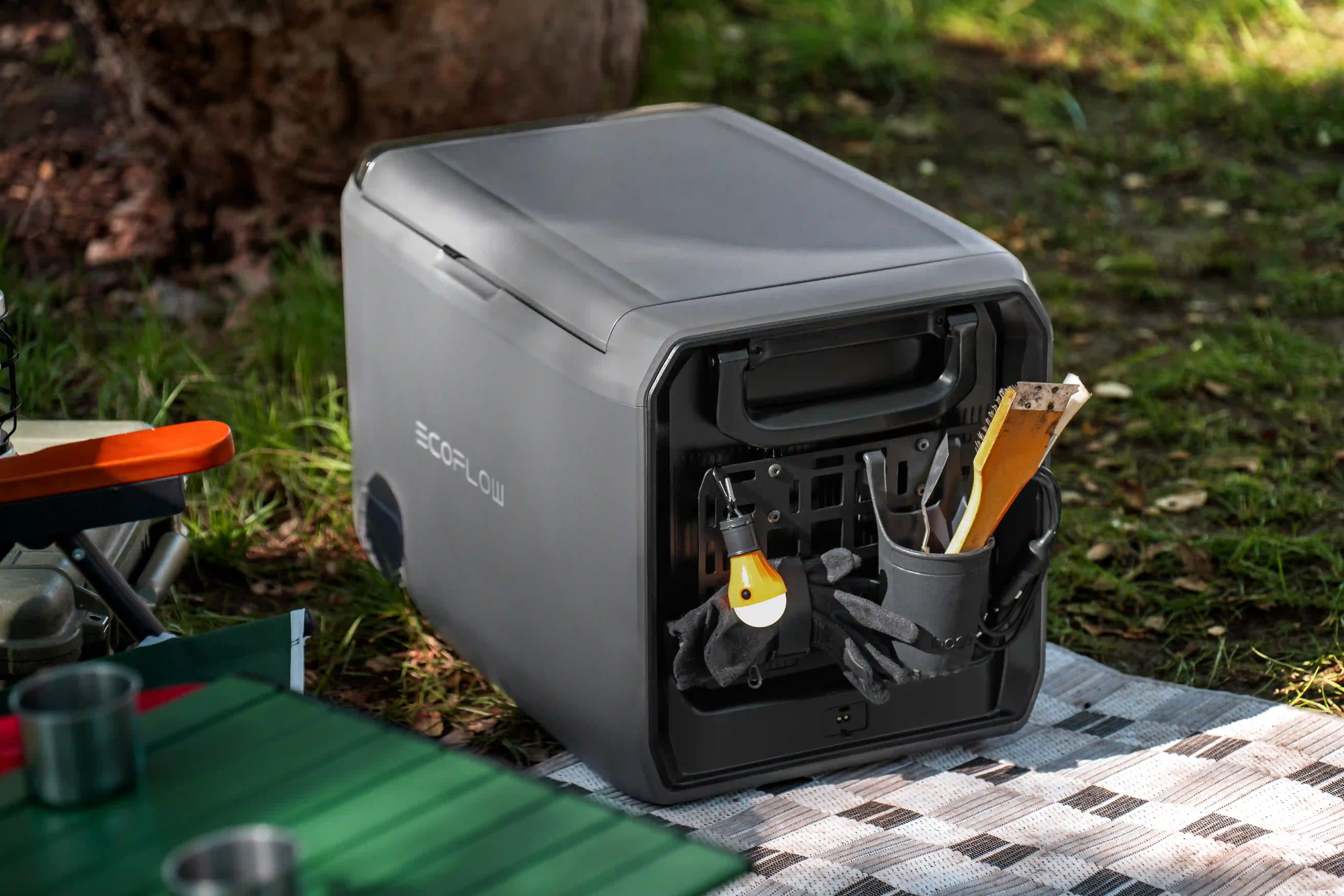
Typical mid-range unit (1–2 kWh):
Fridge → 10–20 hours
WiFi + phones → multiple days
Lights → days
Coffee maker → yes (priorities matter 😄)
High-end units (3–6 kWh):
Can run partial home circuits
Compete with entry-level home battery systems
📈 The bigger trend: decentralization
This isn’t just about gadgets.
It’s part of a larger shift:
Solar → rooftop
Batteries → garage
Portable → everywhere else
We’re moving from:
Centralized grid → distributed energy network
Where:
Homes store energy
Vehicles store energy
People carry energy
💡 What to watch next
1. Price compression continues
Expect more capacity for less money every year
2. Hybrid systems win
Portable + home battery + solar → all connected
3. Retail distribution explodes
Costco, Home Depot, Amazon
This becomes a default household purchase
4. Software layer emerges
Apps that optimize when to charge, discharge, and sell energy
⚠️ The underrated insight
Portable energy isn’t competing with the grid.
It’s becoming a buffer layer on top of it.
When the grid fails → you have backup
When power is cheap → you store it
When demand spikes → you avoid it
That’s a completely different relationship with energy.
The Future of Tech. One Daily News Briefing.

AI is moving faster than any other technology cycle in history. New models. New tools. New claims. New noise.
Most people feel like they’re behind. But the people that don’t, aren’t smarter. They’re just better informed.
Forward Future is a daily news briefing for people who want clarity, not hype. In one concise newsletter each day, you’ll get the most important AI and tech developments, learn why they matter, and what they signal about what’s coming next.
We cover real product launches, model updates, policy shifts, and industry moves shaping how AI actually gets built, adopted, and regulated. Written for operators, builders, leaders, and anyone who wants to sound sharp when AI comes up in the meeting.
It takes about five minutes to read, but the edge lasts all day.
The bottom line
Portable power started as convenience.
It’s becoming control.
And over the next decade, the people who can store and move energy…
will have a serious advantage.